

Long COVID as a model: what happens to immunity after a viral infection
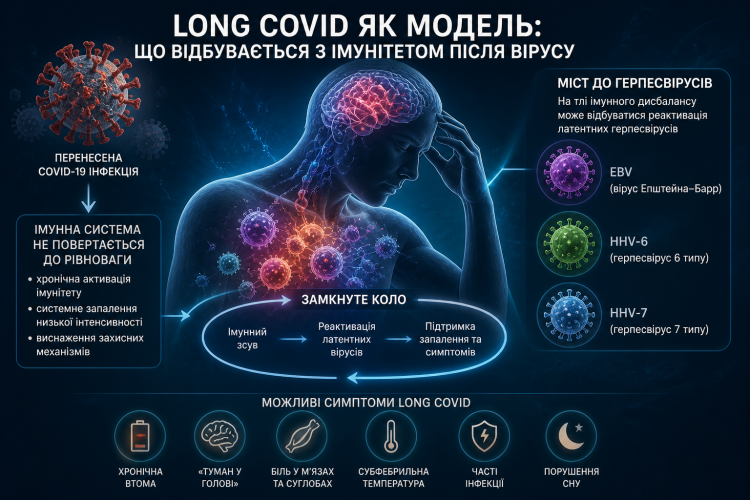
After COVID-19, some people continue to experience fatigue, impaired concentration, “brain fog,” sleep problems, muscle or joint pain and reduced ability to work for months. This condition is known as Long COVID. It has also become a useful model for studying how an infection can alter immune regulation long after the acute phase.
What normally happens after an acute infection
The immune system recognizes the virus, activates protective mechanisms and then gradually returns toward balance. In some people this resolution is incomplete, and the system remains in a state resembling a persistent low-level alarm.
Chronic immune activation
Research on post-infectious illness describes changes that may include altered monocyte activity, cytokine patterns and regulation of innate immunity. These findings do not provide one universal explanation for every patient, but they support a biological basis for persistent symptoms in at least some groups.
Energy use and recovery
Prolonged immune activation consumes energy and may be associated with oxidative stress and altered mitochondrial function. This is one possible explanation for the combination of active immune signaling with exhaustion and poor recovery after exertion. It remains one component of a multifactorial illness rather than a stand-alone diagnostic test.
A possible link with herpesviruses
EBV, HHV-6 and HHV-7 remain latent after primary infection. Some Long COVID studies have reported markers consistent with EBV reactivation in subsets of participants. This is an association: it does not prove that EBV or another herpesvirus causes every case of Long COVID.
A possible feedback loop
One working model proposes that SARS-CoV-2 triggers a strong immune response, immune regulation does not fully normalize, and latent viruses may reactivate in this altered environment. Their activity could then contribute to continued immune stimulation. This model is still being studied and should not be used to justify broad herpesvirus testing or antiviral self-treatment.
Autoimmune processes
Persistent immune activation may create conditions in which autoimmune mechanisms emerge or worsen. Autoimmune thyroid disease, rheumatologic syndromes and neuroimmune conditions are discussed in this context, but Long COVID does not inevitably lead to autoimmune disease.
What this means for a person with persistent symptoms
Long-lasting symptoms are not automatically psychosomatic, yet they are also not proof of herpesvirus reactivation. A clinical assessment should consider other common and treatable causes, the timing and pattern of symptoms, medicines, sleep, cardiovascular and neurological warning signs and appropriate targeted tests.
Seek urgent medical help for chest pain, severe breathlessness, fainting, new neurological deficits, confusion, inability to maintain hydration or rapidly worsening symptoms.
Conclusion
Long COVID shows that recovery from infection can involve prolonged immune, neurological and metabolic changes. Herpesvirus reactivation may be part of the picture for some people, but it is not a single confirmed explanation for all chronic symptoms.
Sources
- Stanford Medicine: Garry Nolan
- PubMed: Long COVID and immune dysregulation
- PubMed: Long COVID and EBV reactivation
This article is for information only and does not replace medical assessment, diagnosis or treatment.
 АС
АС