

Alzheimer’s Disease: Current Scientific Evidence
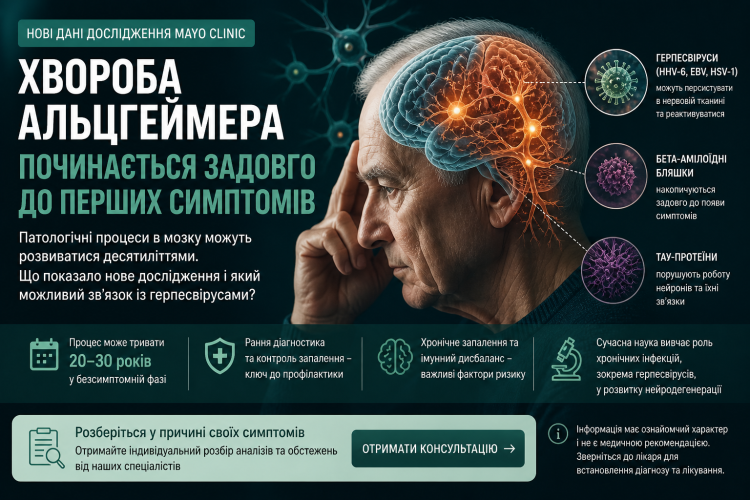
Alzheimer’s disease is traditionally considered a disease of old age. However, modern scientific data change this idea.
A new study conducted by specialists Mayo Clinic, shows that pathological processes in the brain can begin decades before the first symptoms appear.
What exactly did the researchers discover?
According to the publication, the researchers used modern neuroimaging techniques and biomarker analysis to track changes in the brain. It has been established that the accumulation of pathological proteins, such as beta-amyloid and tau protein, begins much earlier than the onset of cognitive impairment.
These changes may be ongoing 20–30 years in the so-called “symptomatic” phase.
How it looks in practice
In the early stages, a person may not experience any obvious problems. However, the following are already happening in the brain:
- accumulation of amyloid plaques;
- violation of signal transmission between neurons;
- slow chronic inflammation;
- damage to myelin and neuronal connections.
Over time, these processes reach a critical point, after which the first symptoms appear — a decrease in memory, concentration, and other cognitive functions.
Why is this important?
This discovery fundamentally changes the approach to prevention and early diagnosis. If earlier treatment started already at the stage of symptoms, now it is obvious: the intervention should take place much earlier.
In fact, we are talking about the need to move from “treatment” to early detection and containment of the process.
Possible connection with chronic infections
Although the Mayo Clinic study does not directly focus on infectious factors, the role of chronic viral infections in the development of neurodegenerative processes is actively discussed in modern science.
In particular, such viruses as:
- Epstein-Barr virus (EBV);
- herpesvirus type 6 (HHV-6);
- herpesvirus type 7 (HHV-7).
These viruses are considered as potential triggers of chronic neuroinflammation. This can create the conditions for gradual brain damage, especially in the presence of an immune imbalance.
Thus, subclinical reactivation of herpesviruses can be one of the factors that strengthen or accelerate pathological processes.
What does this mean for the average person
To summarize, the new data point to several important points:
- neurodegenerative processes can begin long before the first clinical symptoms appear;
- some studies consider chronic or subclinical herpesvirus infections as one of the possible factors of neuroinflammation and acceleration of neurodegenerative processes in susceptible people;
- with coinfection with several herpesviruses, the immune load and severity of chronic inflammation can potentially be higher;
- early diagnosis and identification of risk factors can be critical;
- chronic neuroinflammation is considered one of the key mechanisms of neurodegeneration;
- the state of the immune system can significantly affect the course and speed of progression of pathological processes;
- the scientific community is studying the possibilities of pathogenetic therapy, including antiviral approaches, in the early stages of neurodegeneration potentially associated with herpesviruses.
This is especially true for people with persistent, unexplained symptoms—fatigue, cognitive decline, low-grade fever, and headache.
Conclusion
Alzheimer’s disease can no longer be seen as a sudden disease of old age. This is a long-term process that develops over years, and sometimes decades.
Understanding this opens up new opportunities for prevention, early intervention, and the search for controllable factors, including infectious and immune mechanisms.
Sources
- SciTechDaily – Alzheimer’s May Begin Decades Earlier Than You Think
- Mayo Clinic
- Nature Reviews Neurology—Neuroinflammation in Alzheimer’s Disease
- PubMed Central—Herpesviruses and Alzheimer’s Disease
Disclaimer: this information is for informational purposes only and is not a medical recommendation or a substitute for a doctor’s consultation. All diagnostic and treatment decisions should be made with a qualified medical professional. The authors are not responsible for the possible consequences of independent application of the given information.
What we can offer
As part of information support, we help:
- structure available analyses: PCR, antibodies, immunogram;
- analyze CT, MRI and other examinations;
- identify possible “blind spots” in diagnostics;
- form the logic of further actions;
- orientate about specialized specialists and clinics.
Importantly: we do not prescribe treatment, but help to see the full picture and prepare for an effective consultation with a doctor.
 АС
АС